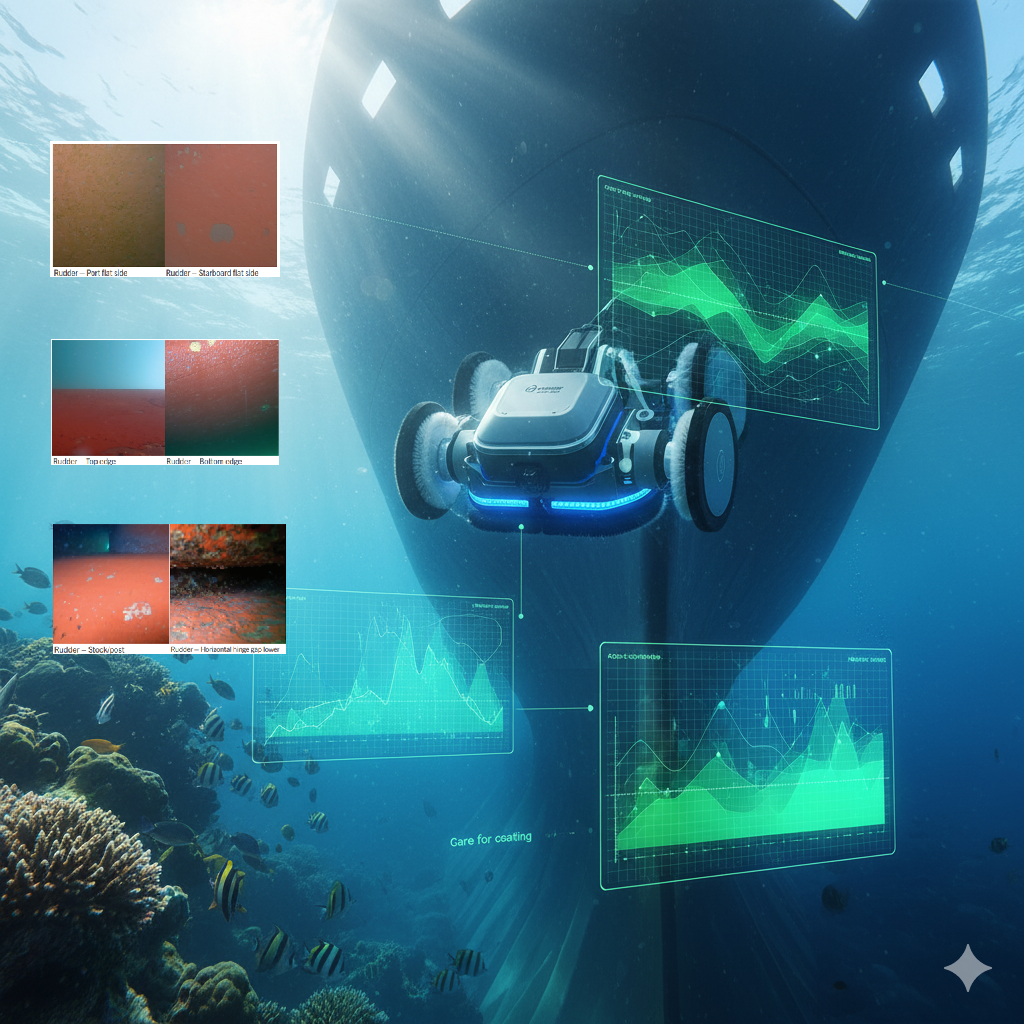
The road from reactive to proactive biofouling management isn’t just about increasing the number of cleanings. It fundamentally requires a shift in hull performance management.
⏰ In time-based management, cleanings are triggered by a vessel’s operation—for example, cleaning every time it has been idle in West Africa.
📈 In reactive scenarios, increased fuel consumption (or, in the best cases, precise hull resistance calculation) triggers alerts to schedule a cleaning.
👁️ For proactive cleaning, however, you have to dive deeper. You’ll need to be sure of the answers to the following questions:
– Which hull should we clean? Is the coating compatible?
– Where can it be cleaned, taking operations and port regulations into account?
– How should we clean it? Is the cleaning technology compatible?
– And now, what is the perfect cleaning frequency?
Every vessel and route is different. Cleaning times can be gradually optimized through detailed, quality cleaning reports and efficient analysis. The goal is to clean before it’s visibly fouled, while simultaneously caring for the coating.
In an ideal world, hull resistance should never reach a point where you can significantly detect fouling.
What do you think? What are your top tips for facilitating proactive hull cleanings?
Pros and Cons
𝐒𝐞𝐜𝐫𝐞𝐜𝐲 🤐.
We’re so used to it that it feels normal. We think it’s even our greatest protection. Hiding the inner workings, showing only what’s smooth, beautiful, high-performing, efficient. Avoiding being fully seen. Withholding any data to avoid criticism.
Never criticizing others either! Staying proper. Charming. Never openly naming the competing product. Relying on hallway whispers.
Boiling inside from not being able to prove our value beyond doubt. Fearing any spotlight on our weaknesses. Guarding our data jealously. Relying on marketing and sales to persuade. Publishing papers and giving talks that are hollow, lacking substance. Deep down, feeling frustrated for frustrating our clients.
𝐎𝐩𝐞𝐧𝐧𝐞𝐬𝐬 👐.
Letting our results be seen. The successes and failures of our applications. Freely acknowledging where others do better. Using that to improve our own formulations. Letting the light dissolve the shadows. Trusting in our ability to innovate. Happily understanding where we can be most useful. Knowing our products better, selling more easily. Building stronger relationships.
And you—what do you choose?
Is sharing real data a strategic mistake, or the best path to sustainable innovation?
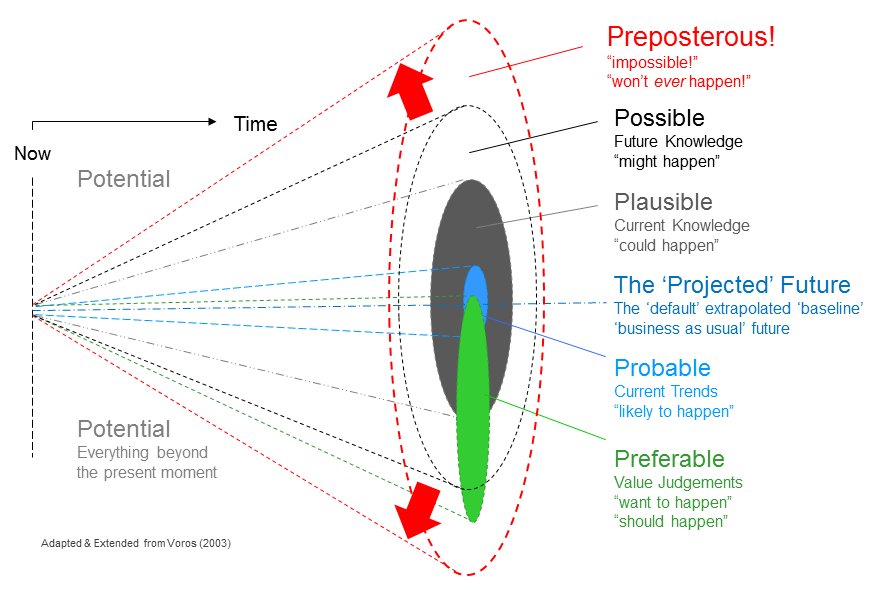
The Preferable Future
The future isn’t about trends. It will be what we make of it.
I’m just back from the second session of the “Convention of Companies for Climate” (CEC) and it’s been incredibly inspiring.
I learned how we can *all* transform our businesses to help regenerate the Earth, create products designed to withstand the fluctuations of an unstable world, and navigate uncertainty with style.
The projected future is not a doom! It is only the most probable outcome if we continue with business as usual.
We have the capability, and the responsability, to act for a “preferable future”, bending the trend, influencing the years to come.
In the fog… but with a vision!
OpenHull will definitely be part of that future.